Product

PRODUCT CENTER

Home Product Special Transformer

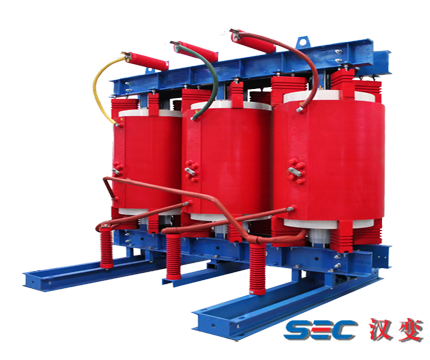
Dry-type earthing transformer

Executive standards:

IEEE C57.12.91-2020 Standard test code for dry-type distributton and power transformers. 

IEEE C57.12.60-2020 Standard for thermal evaluation of insulation systems for dry-type power and distribution transformers. 

IEC60076-11:2018 “Power transformers - Part 11: Dry-type transformers”.

GB/T1094.1-2013“Power transformers Part 1: General”.

GB/T1094.3-2017“Power transformers Part 3: Insulation levels, insulation tests and external insulation air gaps”.

GB/T1094.5-2008“Power transformers Part 5: Ability to withstand short circuit”.

GB/T1094.10-2003"Power transformers Part 10: Determination of sound level".

GB/T1094.11-2022“Power transformers Part 11: Dry-type transformers”.

Contact us

Product Overview

Epoxy-cast Dry-type Earthing Transformers serve as critical equipment in 6–35 kV ungrounded power networks. Utilizing vacuum epoxy casting technology, the windings exhibit superior structural integrity while providing an artificial neutral point via ZN (zigzag) connections. Optional secondary windings can supply auxiliary power. These units effectively limit earth fault currents, suppress overvoltages, and enhance grid stability. Available in mainstream ratings up to 2500 kVA.

Key Features

Safety & Reliability: Class F insulation system; fire-retardant, non-polluting, and environmentally safe.
Robust Performance: Excellent moisture, dust, and pollution resistance; allows immediate re-energization after shutdown.
High Efficiency: Low partial discharge, minimal no-load/load losses, and reduced operational noise.
Durability: High short-circuit withstand capability, compact design, and virtually maintenance-free operation suitable for complex operating conditions.

Applications

Widely deployed in power system substations and renewable energy sectors (wind/solar farms). Ideal for rail transit, metallurgical, and chemical processing facilities, as well as high-rise buildings. Particularly suited for indoor installations in densely populated areas with stringent environmental and safety requirements.

Related recommendations